Contact UsADDRESS
Kolej Burhanuddin Helmi,
Universiti Kebangsaan Malaysia,
43600 UKM Bangi, Selangor Darul Ehsan, Malaysia.
INFO
isyamirah1993@gmail.com
noramirahrosli@yahoo.com SOCIAL
Telegram/username
:@NorAmirah
|
Tuesday, 24 May 2016
CONTACT

DISCUSSION
My Photography Blog
Please leave a comment here... your comments are very much appreciated... Thank you... Bye...
Please leave a comment here... your comments are very much appreciated... Thank you... Bye...
GALLERY
CAMERA SHOT / SHOT TYPE
LONG SHOT (LS)
Long shot (sometimes referred to as a full shot or a wide shot) typically shows the entire object or
human figure and is usually intended to place it in some relation to its surroundings.
 Location: Padang UKM


MEDIUM SHOT (MS)
A mid shot contains the characters or a character from the waist up. From this shot, viewers can see
the characters' faces more clearly as well as their interaction with other characters. This is also
known as a social shot.
 Location: Masjid UKM


CLOSE-UP SHOT (CU)
A close-up or closeup is a type of shot, which tightly frames a person or an object. Close-ups are one
of the standard shots used regularly with medium shots and long shots (cinematic techniques). Close-
ups display the most details, but they do not include the broader scene.


LOW ANGLE SHOT
In a low angle shot the camera is positioned below eye level, with the camera shooting up at the
subject. Shooting up from a low angle makes the subject appear larger and suggests a feeling of
power to be shot from a slightly lower angle to make themselves look taller and more important.

Location: Kolej Burhanuddin Helmi, UKM BANGI. (KBH)

Location: Flatlet K12B, Kolej Burhanuddin Helmi, UKM BANGI. (KBH)

Location: Blok K11A, Kolej Burhanuddin Helmi, UKM BANGI. (KBH).

Location: Kolej Burhanuddin Helmi, UKM BANGI. (KBH)

Location: Rumah Tetamu, Koleh Ungku Omar, UKM BANGI.
A high angle is a camera angle that looks down upon a subject. A character shot with a high angle
will look vulnerable or small. These angles are often used to demonstrate to the audience a
perspective of a particular character.

Location: Pusat Kesihatan, UKM BANGI.
LONG SHOT (LS)
Long shot (sometimes referred to as a full shot or a wide shot) typically shows the entire object or
human figure and is usually intended to place it in some relation to its surroundings.

Location: Masjid UKM

Location: Foyer KBH
MEDIUM SHOT (MS)
A mid shot contains the characters or a character from the waist up. From this shot, viewers can see
the characters' faces more clearly as well as their interaction with other characters. This is also
known as a social shot.

Location: Stadium UKM

Location: Jabatan Pengajian Arab dan Tamadun Islam

Location: Bilik Mesyuarat, Pusat Pengajian Bahasa dan Linguistik, UKM

Location: Kolej Burhanuddin Helmi, UKM BANGI.
CLOSE-UP SHOT (CU)
A close-up or closeup is a type of shot, which tightly frames a person or an object. Close-ups are one
of the standard shots used regularly with medium shots and long shots (cinematic techniques). Close-
ups display the most details, but they do not include the broader scene.

Location: Bukit KBH

Location: Kedai Gambar, Pusanika (TEGUH)

Location: Pusat Pengajian Bahasa dan Linguistik, UKM

Location: Foyer KBH
LOW ANGLE SHOT
In a low angle shot the camera is positioned below eye level, with the camera shooting up at the
subject. Shooting up from a low angle makes the subject appear larger and suggests a feeling of
power to be shot from a slightly lower angle to make themselves look taller and more important.


Location: Flatlet K12B, Kolej Burhanuddin Helmi, UKM BANGI. (KBH)

Location: Blok K11A, Kolej Burhanuddin Helmi, UKM BANGI. (KBH).

Location: Kolej Burhanuddin Helmi, UKM BANGI. (KBH)

Location: Rumah Tetamu, Koleh Ungku Omar, UKM BANGI.
HIGH ANGLE SHOT
A high angle is a camera angle that looks down upon a subject. A character shot with a high angle
will look vulnerable or small. These angles are often used to demonstrate to the audience a
perspective of a particular character.

Location: Pusat Kesihatan, UKM BANGI.
Wednesday, 11 May 2016
INFORMATION
Exposure
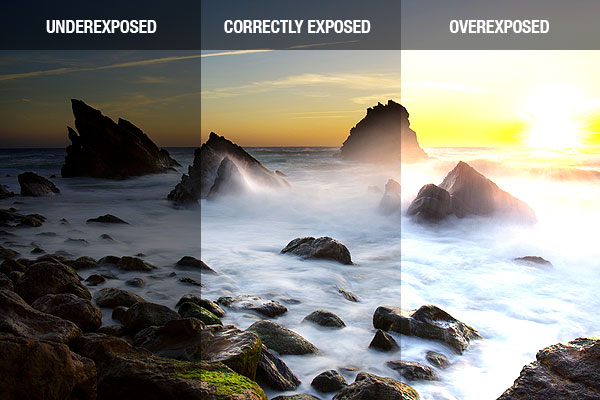
Exposure is the amount of light collected by the sensor in your camera during a single picture. If the shot is exposed too much light the photograph will be washed out (overexposed). If the shot is exposed too little light the photograph will appear too dark(underexposed).
Aperture
-controls the area over which light can enter your camera
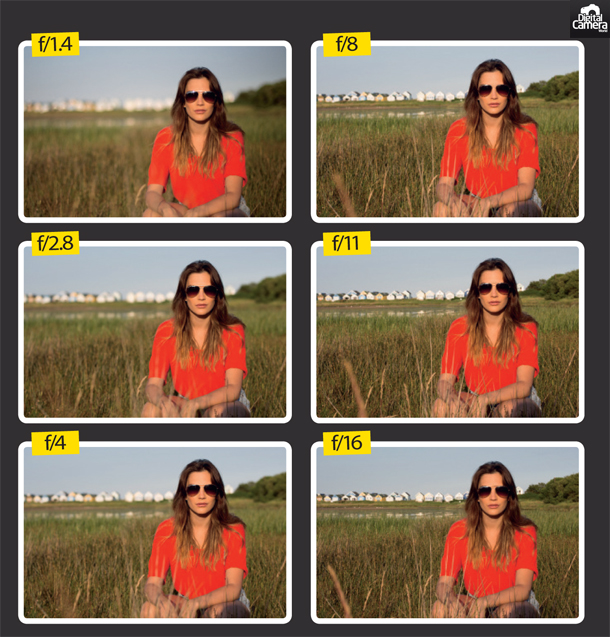
A camera's aperture setting controls the area over which light can pass through your camera lens. It is specified in terms of an f-stop value, which can at times be counterintuitive, because the area of the opening increases as the f-stop decreases. In photographer slang, when someone says they are "stopping down" or "opening up" their lens, they are referring to increasing and decreasing the f-stop value, respectively.
Shutter Speed
-controls the duration of the exposure
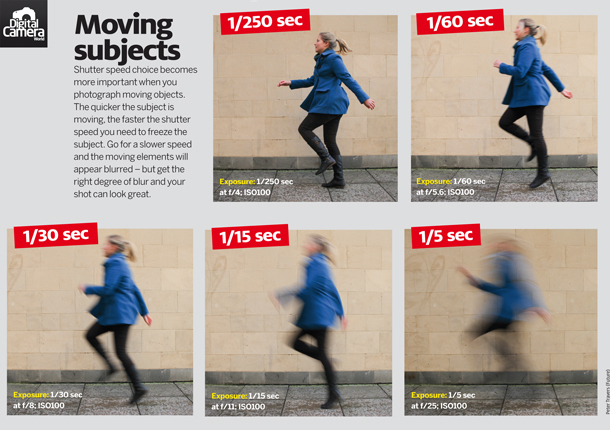
A camera's shutter determines when the camera sensor will be open or closed to incoming light from the camera lens. The shutter speed specifically refers to how long this light is permitted to enter the camera. "Shutter speed" and "exposure time" refer to the same concept, where a faster shutter speed means a shorter exposure time.
ISO Speed
-controls the sensitivity of your camera's sensor to a given amount of light
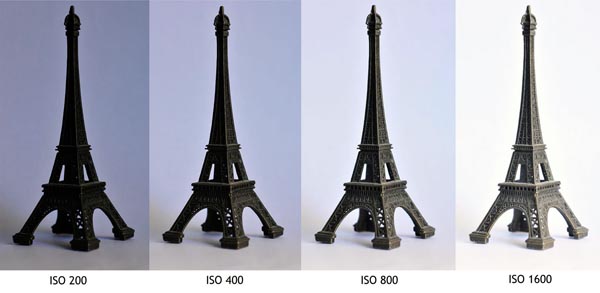
The ISO speed determines how sensitive the camera is to incoming light. Similar to shutter speed, it also correlates 1:1 with how much the exposure increases or decreases. However, unlike aperture and shutter speed, a lower ISO speed is almost always desirable, since higher ISO speeds dramatically increase image noise. As a result, ISO speed is usually only increased from its minimum value if the desired aperture and shutter speed aren't otherwise obtainable.
Composition
Composition is defined as the combining of distinct parts or elements to form a whole. In photography that definition is very important in taking quality pictures. The following rules of composition should be learned and considered but not necessarily used in every photo. Once you have learned these rules you will be more observant of the possible photo opportunities that surround you. But keep in mind that the really famous photographers usually find a creative way to stretch or break the rules of composition.
Rule of Thirds
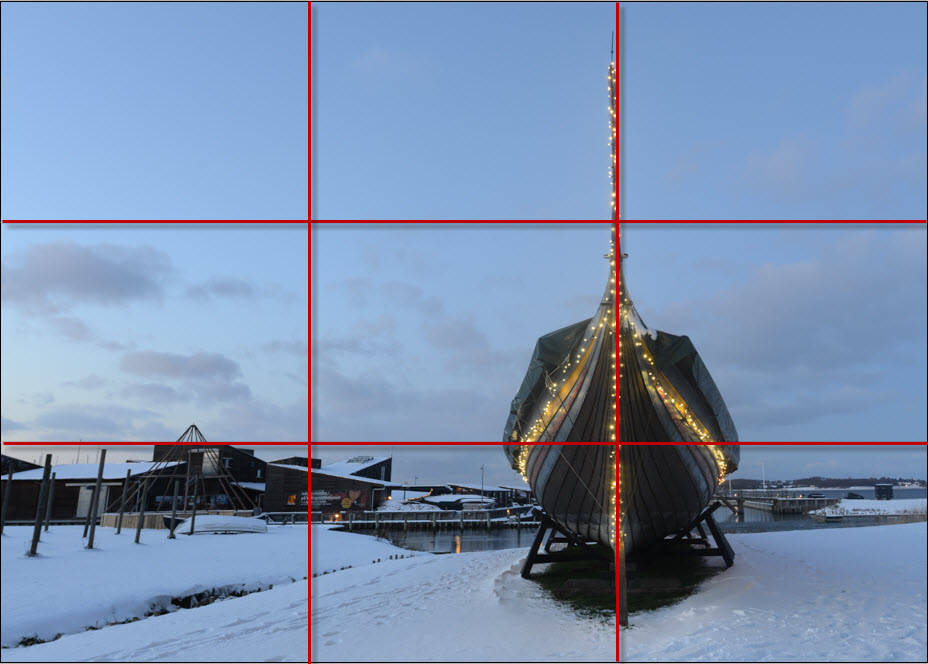
The rule of thirds has been used through the centuries and is probably the most recognized rule. The rule of thirds directs that the frame can be divided into three vertical sections and three horizontal sections. Wherever the separating lines connect is an ideal spot for a subject or point of interest. By positioning your main subject at any of the four intersection points, you are giving your subject more emphasis than If it is right in the middle of the photo. The intersection points can also work if there is more than one main subject in a photo. Most famous photographs and paintings have the rule of thirds applied to them in some way or another.
Depth of field
Depth of field (DOF), also called focus range or effective focus range, is the distance between the nearest and farthest objects in a scene that appear acceptably sharp in an image. Although a lens can precisely focus at only one distance at a time, the decrease in sharpness is gradual on each side of the focused distance, so that within the DOF, the unsharpness is imperceptible under normal viewing conditions
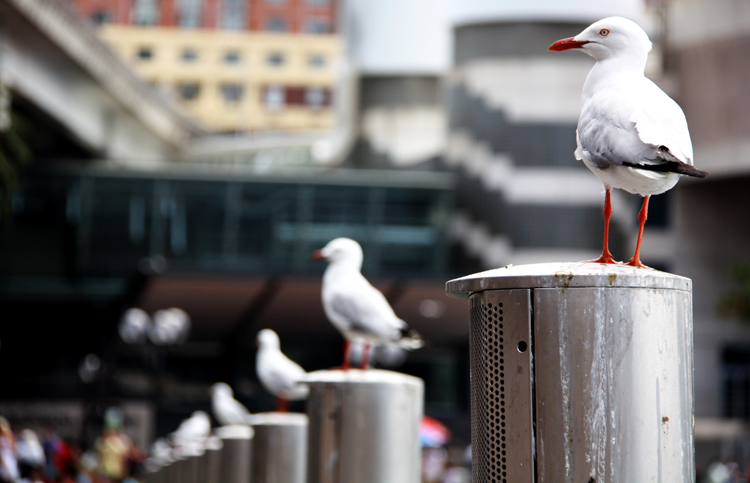
Shallow Depth of field control. (only the main subject of interest is enhanced by throwing other elements out of focus.)
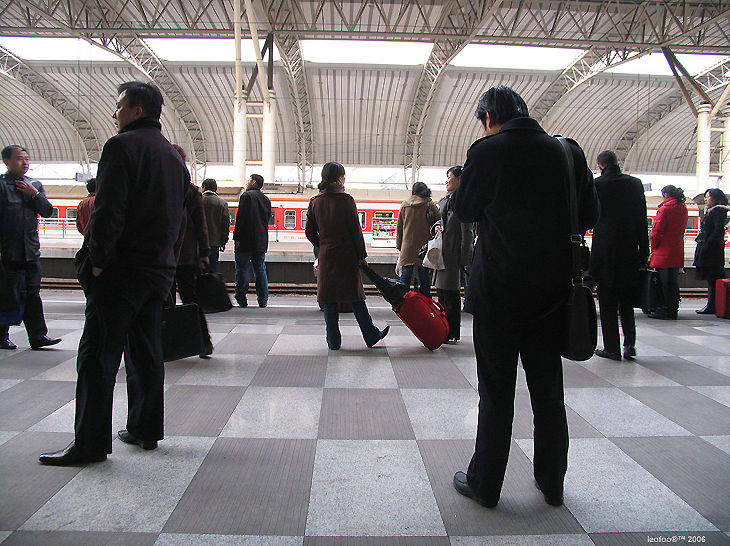
Extended Depth of field control (From near to far in sharp focus)
Balance
Formal balance is symmetrical balance. To achieve this type of balance, the focus of the picture should be placed in the middle of the image, while identical or similar subjects are evenly spaced around the central point. Portraits are an example of a picture where it is best to use formal balance.
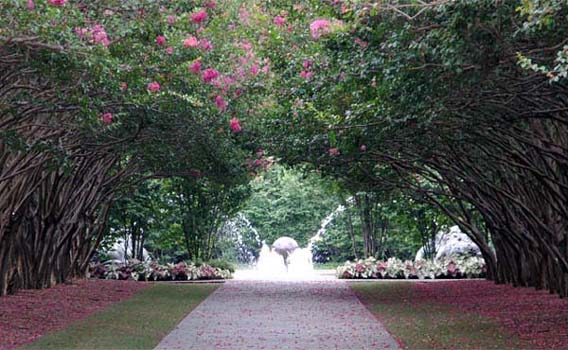
Symmetric Or Formal Balance
Informal balance is more indistinct in nature. In a photograph with informal balance, dissimilar elements balance each other out on either side of the frame. Informal balance can occur with objects of any size, but it is most visually appealing to have a larger object balanced out with a smaller object or several smaller objects. This type of balance usually follows the rule of thirds.
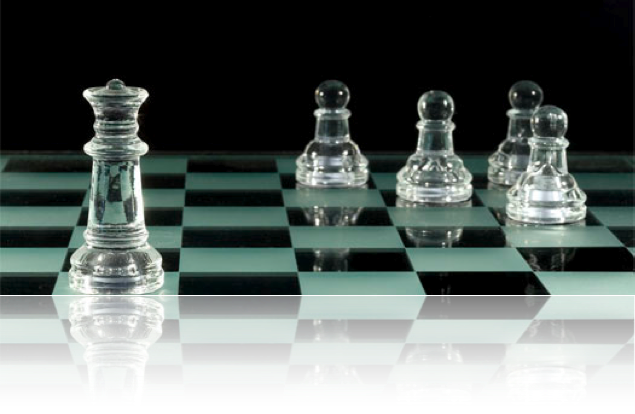
Asymmetric Or Informal Balance
ABOUT ME

Assalamualaikum and greetings...
My Name is Nor Amirah Binti Rosli ..:)
I was born on 15 March 1993
From Tasek Gelugor, Pulau Pinang
Student of Faculty of Humanities and Social Science, National University of Malaysia(UKM)
Majored in Linguistics
I am a PEACOCK type, because PEACOCK types tend to be at the centre of attention, wants to be POPULAR, and quick paced and FAST in action. Generally very ENTHUSIASTIC and OPTIMISTIC. SO, thats ME!
Subscribe to:
Comments (Atom)